 Skip to content


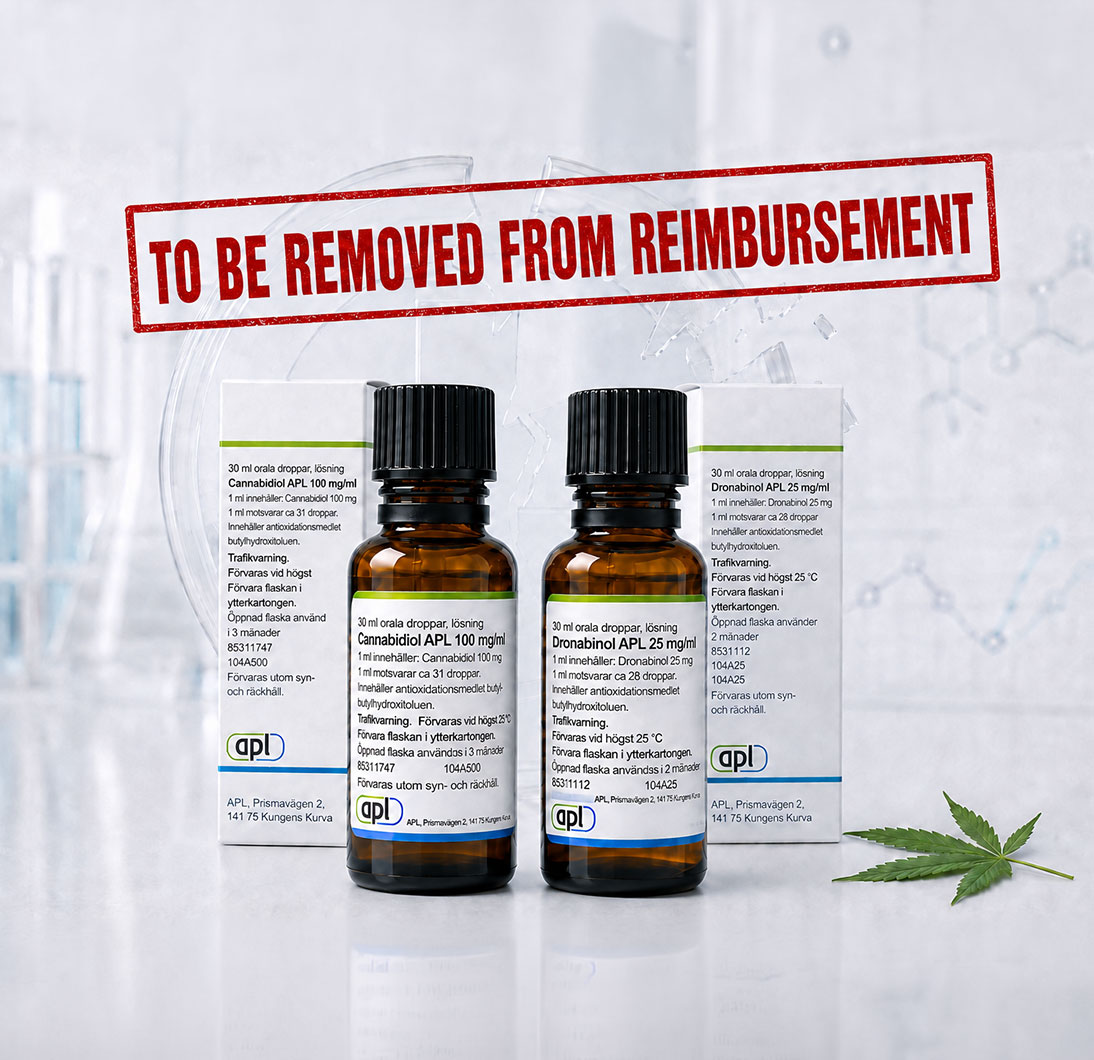
The decision may disrupt established treatment for approximately 2,000 patients and raises questions about continuity of care, clinical equivalence and equitable access.
25 August 2026 | News analysis
Sweden’s Dental and Pharmaceutical Benefits Agency (Tandvards- och lakemedelsformansverket, TLV) has decided that extemporaneously prepared oral medicines containing dronabinol or cannabidiol will be excluded from the national pharmaceutical benefits scheme. The decision takes effect on 1 December 2026.
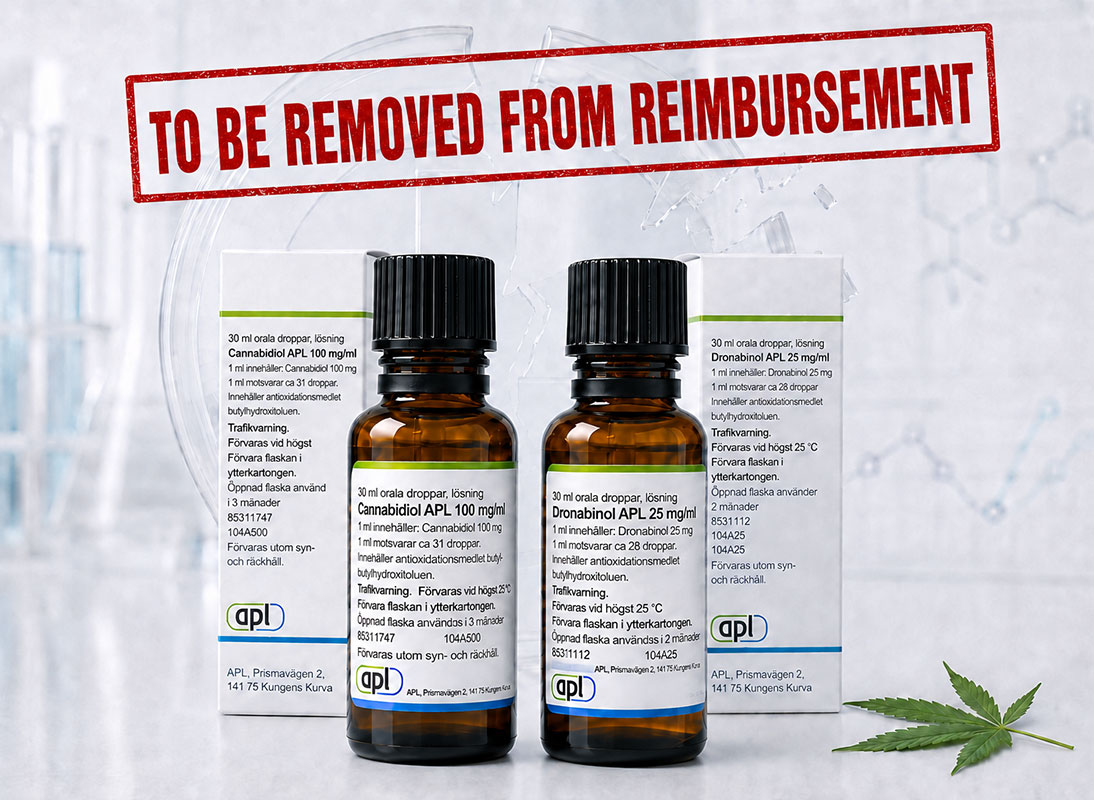
Until then, the preparations remain covered by Sweden’s high-cost protection for prescription medicines, a public reimbursement mechanism that limits a patient’s cumulative out-of-pocket expenditure over a twelve-month period. Once the decision enters into force, affected patients may have to pay the full pharmacy price if they are to continue treatment.
For international readers, the significance of the decision lies not only in reimbursement policy. It concerns individually prescribed medicines used in specialist care, often after conventional treatment options have proved insufficient or produced unacceptable adverse effects. The change therefore raises medical and ethical questions about continuity of care, patient safety and equal access to treatment.
Why extemporaneous medicines matter
Extemporaneous medicines are prepared by a pharmacy for an individual patient when authorised medicinal products or available special-access products cannot adequately meet that patient’s clinical needs. They allow the prescriber to individualise the active substance, concentration, dose and pharmaceutical form.
Dronabinol is delta-9-tetrahydrocannabinol (THC), while cannabidiol (CBD) is a pharmacologically active cannabinoid without the same intoxicating profile. In Swedish clinical practice, the preparations concerned are primarily used in specialist treatment of patients with chronic, complex and treatment-resistant symptoms. They are prescription medicines dispensed through pharmacies, not consumer CBD products or recreational cannabis.
The decision does not prohibit physicians from prescribing these preparations. The treating physician will continue to determine, following an individual clinical assessment, whether an extemporaneous medicine is medically indicated. What changes is the patient’s financial ability to obtain and continue the prescribed treatment.
TLV cites increased prescribing and the structure of the reimbursement system
TLV states that the use and sales of the relevant preparations have increased substantially. The agency also considers that the products have been used in a manner inconsistent with the intended role of extemporaneous medicines, allowing reimbursement for active substances that are also found in authorised medicines outside, or only partly within, the benefits scheme.
The presence of the same or similar active substances, however, does not automatically make medicines clinically interchangeable. Formulation, concentration, route of administration, dosing flexibility, cannabinoid ratio and authorised indication may all be relevant to an individual patient’s response and tolerability.
TLV also acknowledges that there is no authorised medicine that directly corresponds to the extemporaneous preparations now being excluded. This is a central clinical consideration: withdrawing reimbursement does not, in itself, create a therapeutically equivalent alternative.
Risk of treatment disruption
For patients who have achieved stable and clinically meaningful symptom relief, interruption may be associated with worsening pain control, sleep, mobility, psychological well-being and overall function. The consequences will differ between patients, but the risk is particularly relevant in complex, long-term conditions.
If patients cannot afford to fund treatment privately, the policy may in practice end a physician-prescribed and effective therapy for financial rather than clinical reasons. Approximately 2,000 patients may be affected, according to reporting by Cannabis i Fokus based on the current patient population.
A discontinuation may also increase the need for other medicines, additional healthcare contacts, sickness absence and social support. A reduction in pharmaceutical reimbursement expenditure cannot therefore automatically be interpreted as an equivalent saving for the healthcare system or society. Costs may instead be transferred to other parts of healthcare, social insurance, municipal support systems and, above all, the patient.
Clinical continuity must be protected
Patients should not stop or alter treatment without consulting the responsible clinician. Any change should be planned on the basis of diagnosis, treatment history, documented benefit, adverse effects and current functional status.
Before 1 December, healthcare providers should undertake structured, individual reviews. For each patient, clinicians should assess:
- the documented effectiveness and tolerability of the current treatment;
- the clinical risks associated with dose reduction or discontinuation;
- whether a genuinely equivalent therapeutic alternative is available;
- how any transition should be implemented and monitored; and
- the likely consequences for function, quality of life and use of other healthcare resources.
Healthcare decisions must be grounded in individual medical need, available scientific evidence and clinical experience. Economic prioritisation is unavoidable in a publicly financed system, but it must be weighed against disease severity, patient benefit, the risk of deterioration and the principle of care on equal terms.
A need for transparent follow-up
The consequences of the decision should be monitored systematically. Sweden needs data on how many patients can continue treatment, how many discontinue because of cost, which alternatives are introduced and what medical and socioeconomic outcomes follow.
Relevant outcomes include patient-reported symptom burden, functional capacity, quality of life, adverse effects, use of other medicines, healthcare utilisation and sickness absence. Without such data, it will not be possible to determine whether the decision produces a genuine societal saving or merely transfers costs and suffering to patients and other parts of the welfare system.
The immediate priority is to ensure that patients are not left to manage the consequences alone. Continuity of care, individual clinical assessment and patient safety must remain central as the policy is implemented.
Sources and further reading
• Swedish Dental and Pharmaceutical Benefits Agency (TLV), public announcement, 24 August 2026.
• Aureum Life, When Economics Threatens Cannabis Treatment, 29 July 2026 (Swedish).
• Aurea Care Medical Science Journal, Medical Cannabis in Sweden: A Status Update, 3 March 2026.
Editorial note: This article provides general scientific and policy information and does not replace individual medical advice. Patients should consult their treating clinician before making any change to prescribed treatment.